V
Welsh Interlude
A bare white tree on an island stands
Go find it if you might
It marks the spot where I lost my way
On that black Carmarthen night
I came upon a whirling pool
Where a silver sewin lay
She took my fly in that whirling pool
She met her destiny
We arrived in Llandeilo around 4 p.m., Saturday 6th July, in time to collect my weekly permit from Mrs Morgan at Towy Sports (£70 for the week). She was pleased to be back to normal after the turmoil of last year’s Foot and Mouth outbreak. She told me that a few sea trout had been caught the previous week now that the river had dropped back to near six inches above summer level. Then I had to rush back up to the Post Office in Llandrwa to buy my eight day migratory rod licence (£16.50), timed to begin at 10 p.m. that night. I was full of hope. The problem was where to start! Despite months spent poring over aerial photographs and Ordnance Survey maps, I had no clear idea where to begin. Mrs Morgan had pointed out a few of the more popular pools, including Llynshendy. I decided to make a start there in the early evening.
I parked at the roadside, hopped over the gate and found the river just a field away. I met one solitary angler who was busy spinning a Rapala in a likely looking run. Dennis, a local angler staying in the caravan at the farm, told me he’d had a number of large sewin this season and last year he’d caught around thirty averaging 5 to 6 pounds (what an average!), including a few fish into double figures. As is customary on association waters up and down the country, Dennis was very helpful and kindly took the time to point out a few of the nearby lies and crossing points on that part of the river. I followed his advice and made my way up to the Baskets, in time to join two English visitors, one a club member who now lived in Swansea. They too were staying in a caravan on the farm and had but a short walk to the river. We had a good chat as we awaited full darkness and it was after 11 p.m. before we got started. I discovered that the fishing, on what was widely reputed to be “the best sea trout river in Britain”, was today a mere shadow of what it had once been and the fish smaller. Much of the blame was laid on the building of the dam on Lynn Brianne – a common story up and down the country – despite efforts to improve the water quality by liming the upper river.
I had only one good pull that night, to a 1½ inch Needle Fly fished slowly over a likely looking lie, but failed to connect. The lad from Swansea had a sea trout of 1¾lb on a 1½ inch black hair wing tube fly, with red body and gold rib. The drizzle persisted till dawn, when two local anglers appeared to ply their craft with the worm. Further advice from them was that either the pools above the Dulais or the newly acquired club water above Nantgaredig might be worth a try the following night.
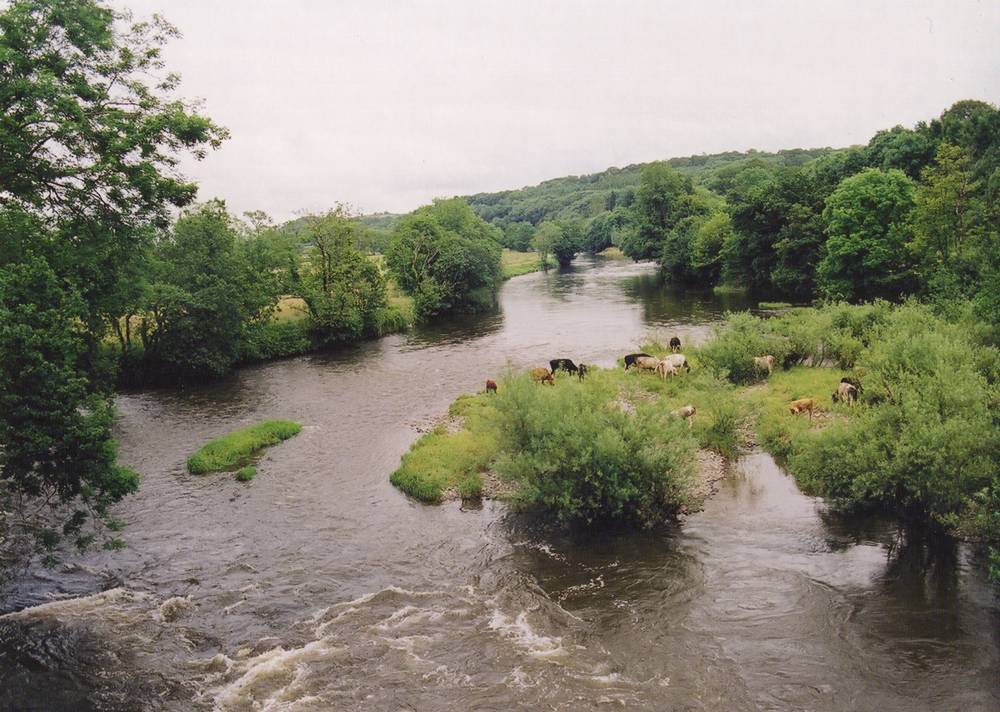
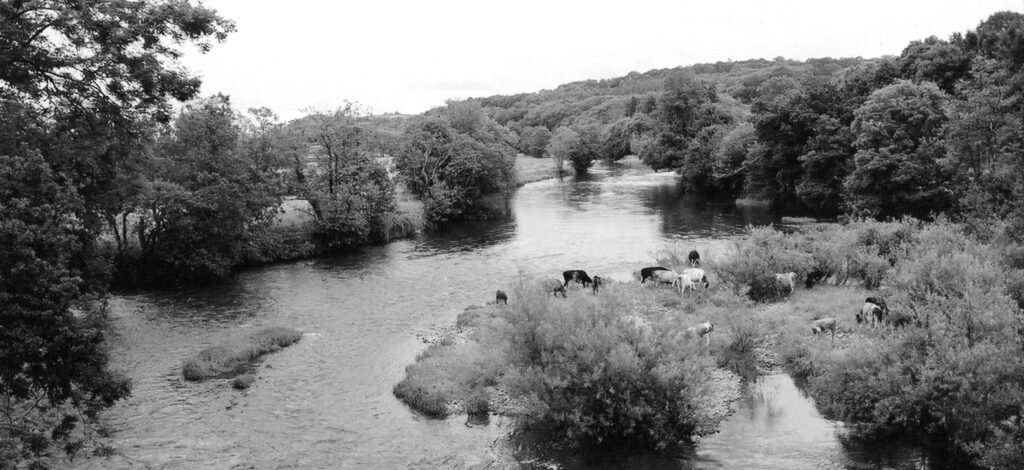
Having explored the river around Llandeilo on the Sunday afternoon, I had settled on Cobners for that night’s fishing. This was a perfect looking sea trout pool, lying between the suspension bridge above and Llandeilo road bridge a little further downstream. A fast run into a deep right hand bend straightened and slowed through the main body of the pool for 100 yards, with heavy tree cover on the far left bank, gradually shallowing towards an easily waded tail, which then ran into a long flat before merging after a further 100 yards with the pool below. It looked very fishy indeed.
As I waited for full darkness to fall, one or two heavy fish sploshed under the trees in the main belly of the pool. A steady drizzle and a mild night looked promising. It was fairly windy but the pool is well sheltered. Fishing for sea trout on a Sunday was, for me as a Scot, quite a novel experience! I began with two singles in the fast run and fished my way carefully down into the main body of the pool. No response. On changing the tail fly for a 1¼ inch Needle Fly around midnight, I had a good strong take near the pool tail and was suddenly connected to my first Towy sea trout, a very fresh, lively fish just under 2lb. I had a further two or three pulls on my next run through the pool but failed to connect. The drizzle turned to heavy rain at 2.30 a.m. and I called it a night.
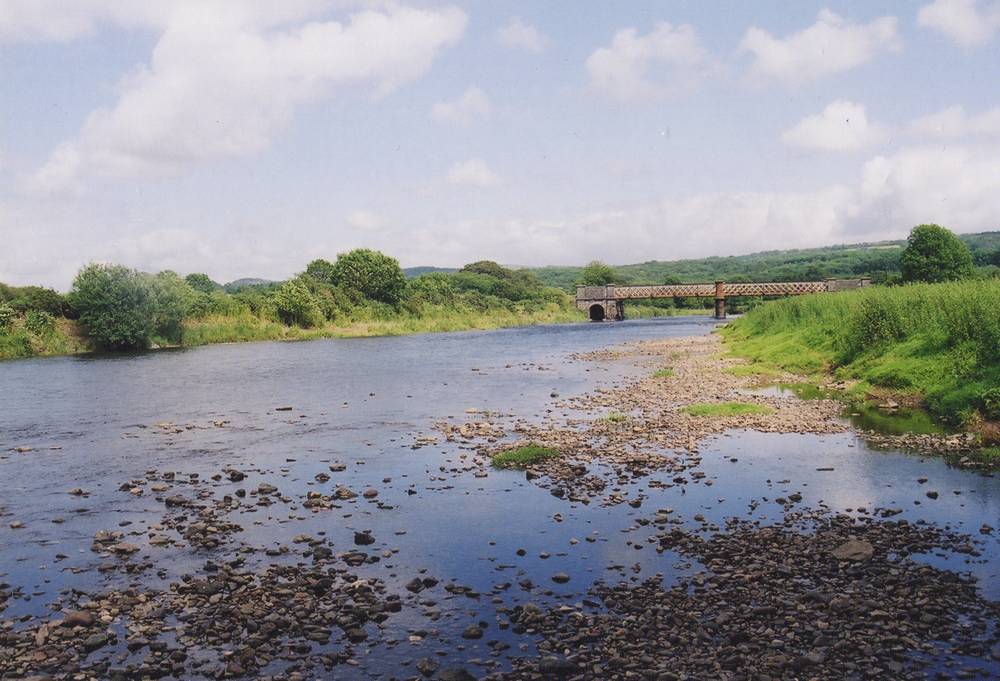
The following day saw the river up a good few inches and running with a lot of colour, so I gave the Monday night a miss. By Tuesday evening, the Towy had cleared, so I decided to have another go in Cobners, hoping that the slight rise the day before may have freshened the river … and perhaps brought a few fresh fish into the pool, which, though still clear, was running an inch or two higher than on Sunday night. I felt that the slightly faster flow would suit a neutral or intermediate line, so I put up the DT7 Glider Neutral line and began with a size 8 Ginger Pearl, with a palmered hackle, on the dropper and a 1¼ inch Needle Fly on the tail. It was a bit cooler tonight, with a clear sky and just the odd shower, but still quite mild and I was hopeful. Again, one or two fish showed shortly after dark. I had one very strong pull in the main body of the pool but there was no sign of fish in the shallow tail. I tried Needle Flies up to 2½ inches long followed by a run through the pool with a surface lure, with no further response. The rain came again at 2.30 when I retired defeated. A disappointing night!
The wet weather continued through Wednesday morning, giving around a quarter of an inch of rain. I walked with Kathy up a good stretch of the upper club water in the afternoon and I noted a lovely pool, which lay below Cwmcrymlyn farm. This was the Downs Pool, consisting of a fast run into a long narrow pool, with dense bankside tree cover overhanging the deepest flow down under the left bank. The right bank was open and easily waded over a fine gravel bed for most of its length. This is where I would concentrate my efforts that night.
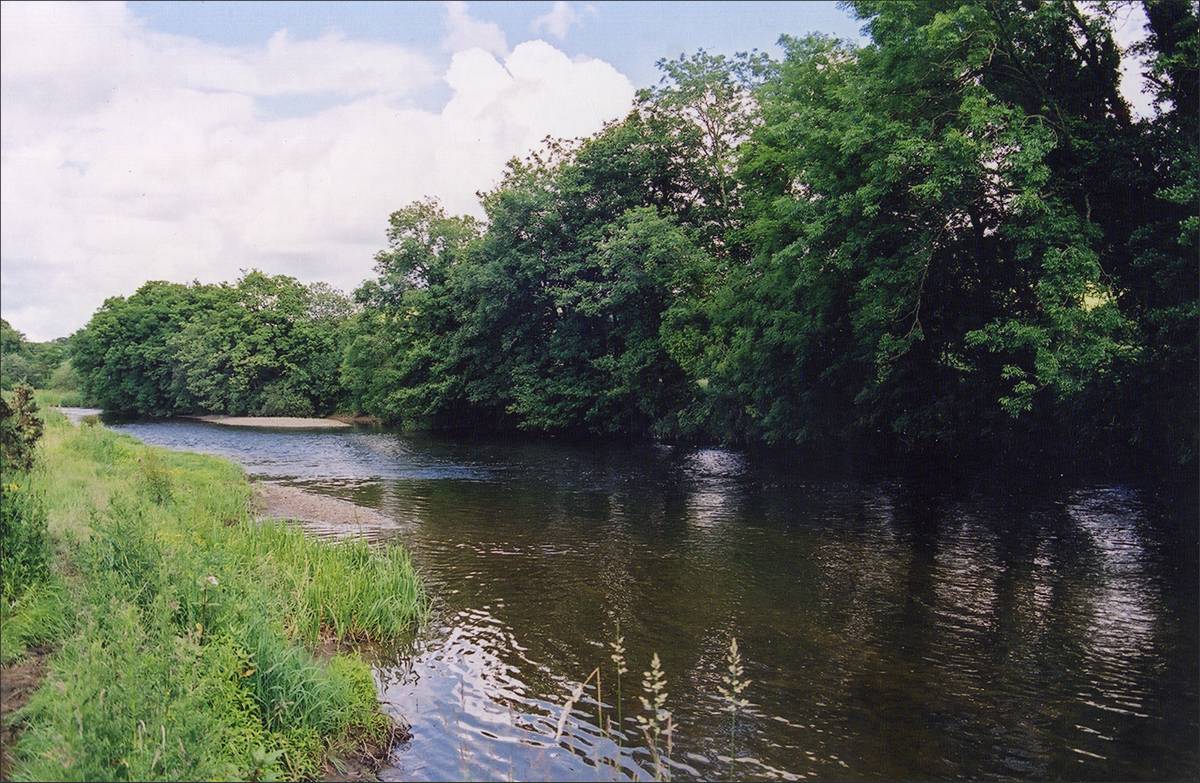
I set off from the cottage at nine to give time for further exploration of the top section of the club water. Parking in the designated parking area by the railway crossing, I followed the track down to the corrugated hay shed. After some difficulty negotiating the recently formed ox-bow lake, I discovered a nice wide pool near the top limit of the beat. It looked a bit shallow perhaps, with no tree cover, but had a lovely looking tail. I carried on upstream and encountered a local angler who was busy spinning a deep pool from the far bank. This was part of the Cross Hands water, just upstream of the Llandeilo Association beat limit. He had caught sixteen sea trout this season, including one or two good fish, mainly in the last fortnight.
Encouraged by this news, I made my way back down to the Downs pool, with no other fishers to be seen. I began perhaps a little early and fished down the hundred yard length of the pool, taking a sea trout of 1½lb on the Needle Fly two thirds of the way down. A promising start! On fishing down the pool for a second time, I discovered that the small treble on the tail of the Needle Fly had picked up some weed. On examining the water by torchlight, I found that it was now surprisingly mucky, carrying a load of suspended fine green weed and algae. I realised only then that the river was also running a little higher and faster than when I had begun only an hour or so earlier.
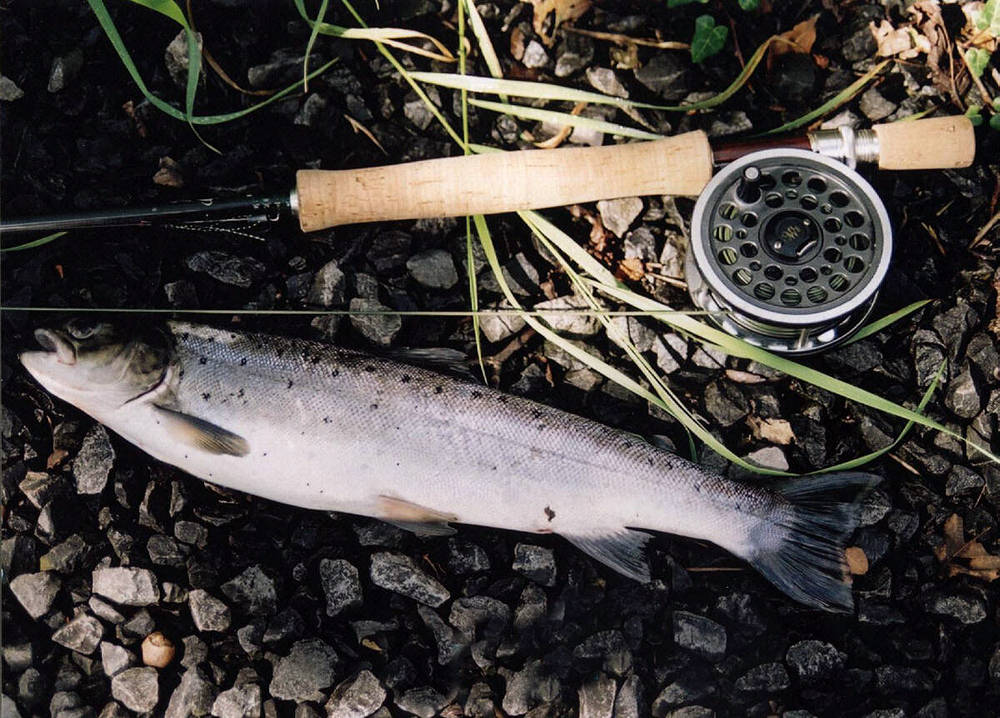
I decided to rest awhile on the bank in the hope that the river might clear but it continued to rise for the next hour. So that was the fishing done for the night. On making my way back over the field, I met two fishermen who were staying in a cottage over on the other side of the river. They had waded across to fish the right bank. They told me that the rise in river level was most likely due to a release of water from the dam up at Lynn Brianne, which must have collected a load of weed and debris on its way down. Another night’s fishing lost! The two other fishers had had no fish that week so far. Apparently, the river had been running up to a foot above summer level all week, too high perhaps for good night fishing. This also helped to explain the rather featureless nature of much of the river I had seen since my arrival, with few of the well-defined runs and pools I had expected to find. I learned later that my two friends got a bit of a soaking that night while crossing the river back to their cottage! This surely highlights the importance of keeping an eye out for unexpected rises in river levels at night.
On the Thursday I met another angler, who was down from the Borders for a week’s fishing. He had had three sea trout up to 5½ pounds, fishing near the top end of the beat. He had fished here in previous seasons with some excellent results at the pumping station at Manordeilo. He also happened to mention incidentally that the Canonbie water on the Border Esk had seen some great catches recently. This was of particular interest to me as the Border Esk was high on my list of rivers to explore over the seasons ahead. Indeed, as things turned out, I was to spend many a good night on that river over the next three seasons.
With only two nights of fishing to go, I had hoped that the Towy would drop and settle by the Thursday night. It was not to be. Heavy rain fell on our cottage at lunchtime and continued up in the hills around Lynn Brianne during the rest of the afternoon, putting the Towy up and coloured, and unfishable that night. I hoped that it would clear by the Friday night, my last on the river. I took a run up to have a look at the River Cothi at Edwinsford, which was running high and very coloured. I thought it might be worth fishing on the Friday.
On Friday morning the Towy was still running high and brown. The Cothi at Edwinsford had run off a bit and was looking good, so I decided to take the offer of a day ticket on the Cothi on the short stretch bordering Island Farm immediately upstream of Edwinsford, in the hope that a sewin or two might have run on the high water to the upper reaches.
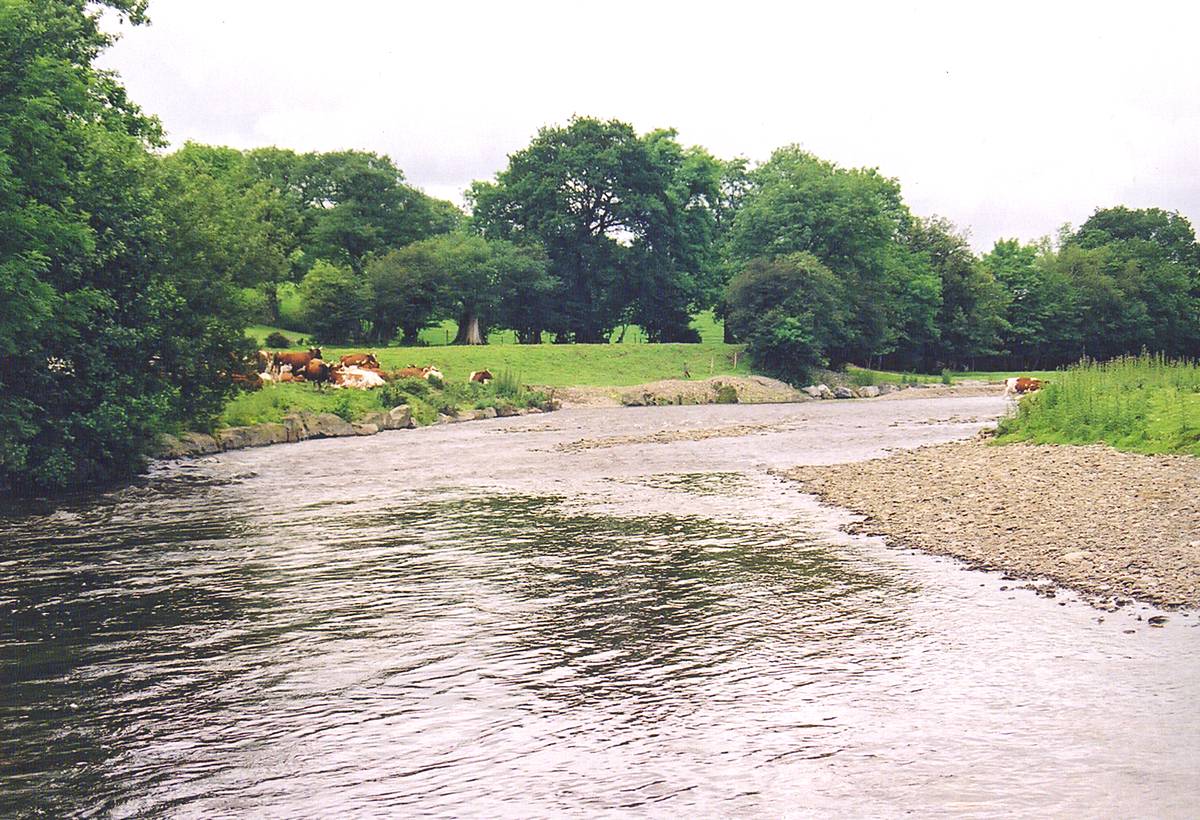
I fished the fly for an hour or two on the Friday afternoon on a falling water but saw no sign of sea trout, and hooked only a few trout and parr. That evening, my last night of the week, I was faced with a choice of fishing the Towy, which was still carrying some colour, or the Cothi. Judging that the Cothi would be running clear by dusk, I thought it the better bet.
I began early and fished quickly down the mile or so of the beat, casting here and there in likely spots, with no sign at all of any sea trout in the river. I eventually arrived, as darkness fell, at a nice looking pool at the very bottom end of the beat. If truth be told, I later wondered if I might have strayed, in the darkness, onto the Edwinsford water. Fishing beat boundaries are so often indistinctly marked. This pool, though, looked very promising indeed with good tree cover on the far right hand bank and good deep water under the trees, just the place for a sea trout to lie at ease.
I fished carefully, thoroughly covering the whole pool with a cast of two size eight singles – a Ginger Pearl on the tail and a Dark Mackerel on the dropper. Yet still no sign of any sewin.
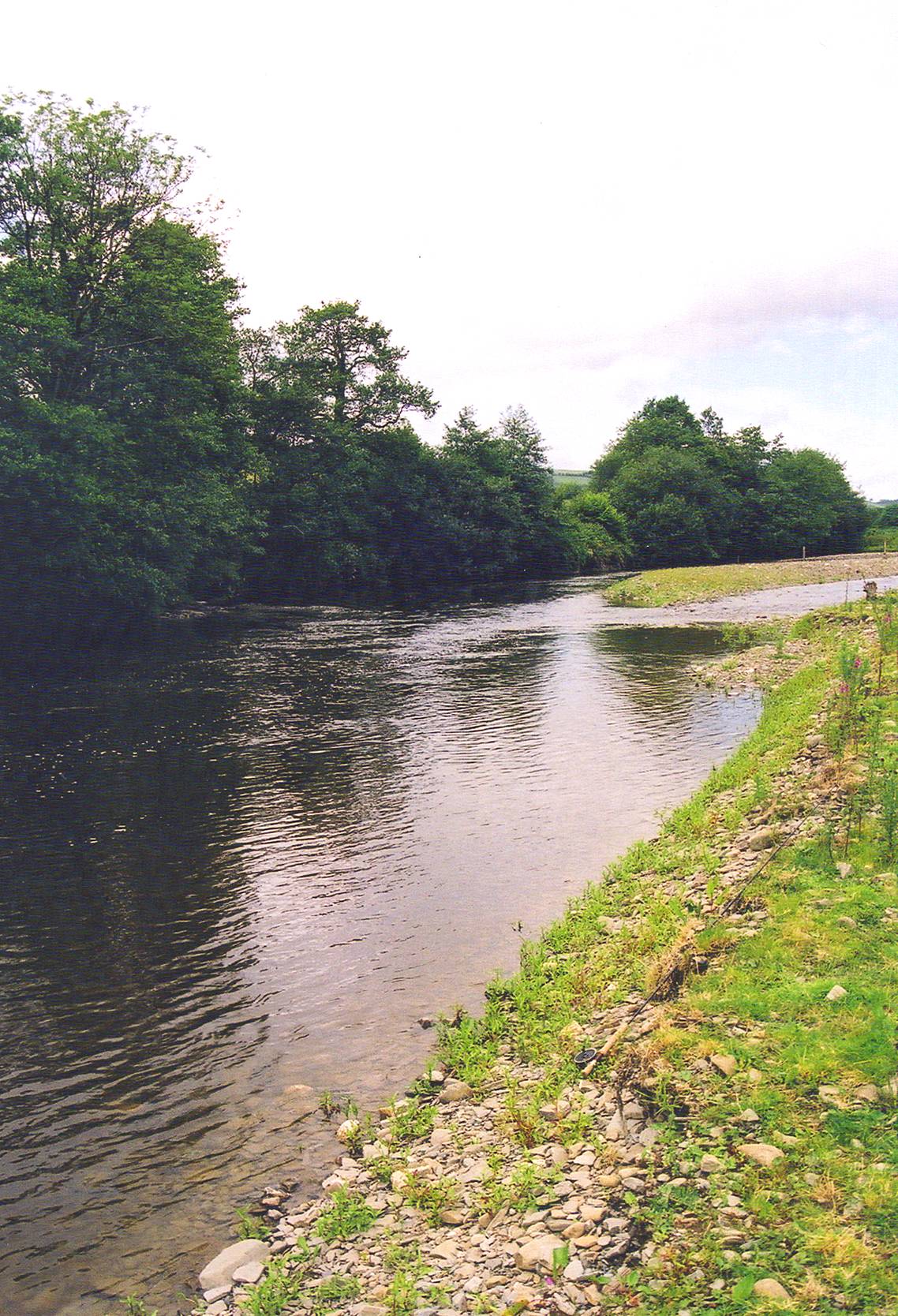
It was a lovely fishing night but early hopes soon receded. The river seemed dead. It was past eleven o’clock. I was on the point of giving up and perhaps having a final hour or two on the angling association water on the Towy down at Llandeilo, where I had taken the two small sewin earlier in the week, when out of the blue, as the flies swung round for the umpteenth time into the slack water near the left hand bank, I had a sudden, solid take. My surprise at this cannot be overstated.
I knew at once that I was into a heavy fish, certainly over five pounds, as it slashed and rolled around worryingly on the surface on being hooked. After a few moments, the fish went down and moved out into the main stream, playing more like a salmon, immovable deep in the flow with an occasional angry shake of the head. I could do no more than keep a steady pressure on, trying all the while not to get line back on the reel too soon and find myself playing a heavy fish under the rod tip. The fish didn’t try to run far. I would manage to coax it in a few yards before it moved back effortlessly into the main stream. I couldn’t risk putting too much pressure on. Patience was the thing. Allow the fish to pull when it wanted to while keeping a steady tension on the line when it stopped, praying that the hook hold was secure. I had left the net in the car – there’s optimism for you! – so I would have to beach the fish, inevitably prolonging the fight, as it would have to be played out before any attempt at beaching on the steeply sloping shingle bank.
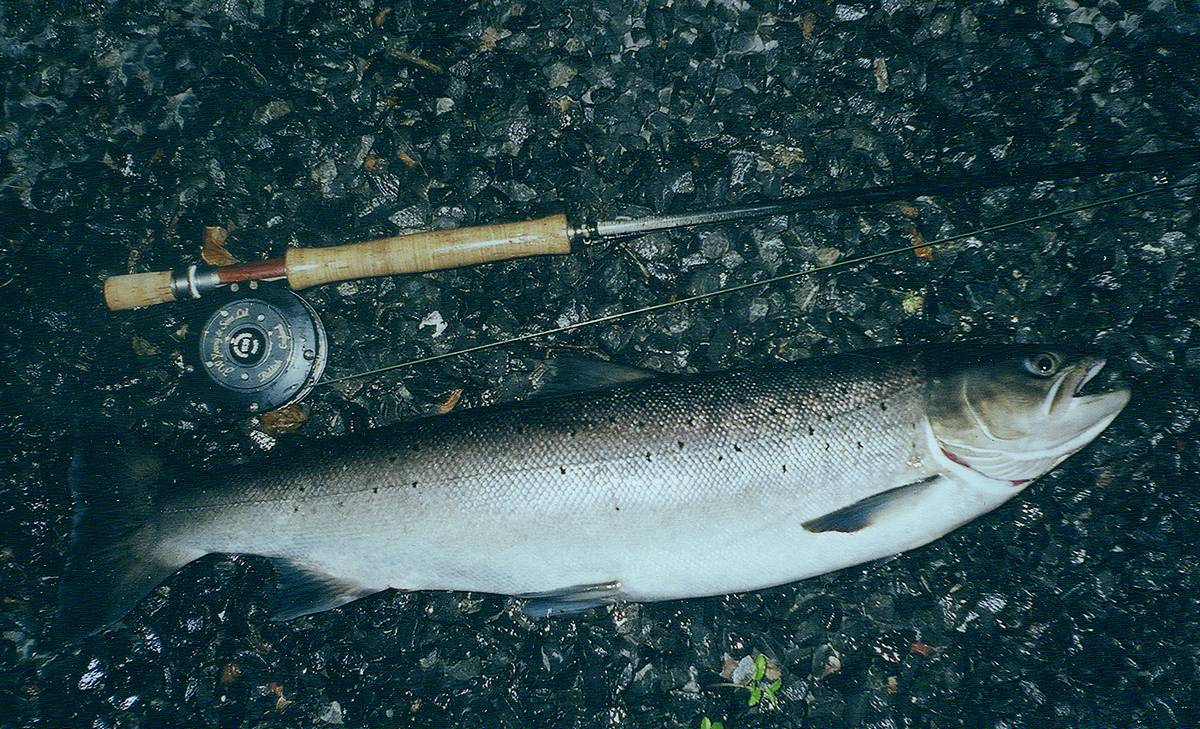
It must have been a good ten minutes before the fish first showed a bright silver flank in the near pitch darkness. I could see then that this was an exceptional sea trout, possibly my biggest yet. I thought it might even go over ten pounds. A worrying few moments followed as I brought it towards the bank, when it would take off again in fright. But each time I drew it near it weakened and when it at last turned on its side, beaten, I managed to draw it on to the bank. I gripped it by the tail and pushed it ashore before lifting it well up the bank away from the river. What a fish, solid silver gleaming in the darkness. It had taken the Ginger Pearl tail fly, dressed with mallard wing on a size 8 Partridge Captain Hamilton hook, fished on a DT7 Shakespeare Glider Neutral line and an 8lb fluorocarbon monofilament leader, the rod a ten and a half footer recently built on a nice three piece Harrison blank, paired with a trusty Young’s reel.
Was the fish over ten pounds? Hard to say but not far off. This was definitely my best sea trout to date – I had caught bigger sea trout on the Endrick, two of them in one night in fact, but those fish had been caught late in the season and were not so fresh (see Chapter 1 On Endrick Water). My spring balance only went to seven pounds which was way too inadequate. It would have to wait till morning when I would take it into Mrs Morgan at Towy Sports to be weighed. As it turned out, the fish weighed nine pounds on the button, and may have lost a few ounces overnight too. A subsequent scale reading indicated that this was a female sea trout five or six years old, having spent two years in the river as a parr, then one or two winters at sea before returning to the river for the first time. It had spawned in the last two winters and was on its third spawning run when caught.
I fished on for another hour or so with no more offers before I called it a night, more than satisfied. It had been a hard week with little to show for my efforts but well worth it in the end. I may not ever catch a better sea trout than this.
Interestingly, as I recall, we had recently given our daughter a gift of a set of Tarot cards, as she seemed into that kind of thing. Before leaving for our holiday, I persuaded her to give me a reading on my prospects for the week’s fishing ahead. My fate was truly in the cards, which predicted that I would have a difficult week, working hard for little return, but, in the end, perseverance would bring its own reward. Who says that fortune tellers are charlatans!
Chapter VI – On the Border Esk
First edition printed hardback copies of SEA TROUT NIGHTS may be purchased at Coch-y-Bonddu Books