III
On Allan Water
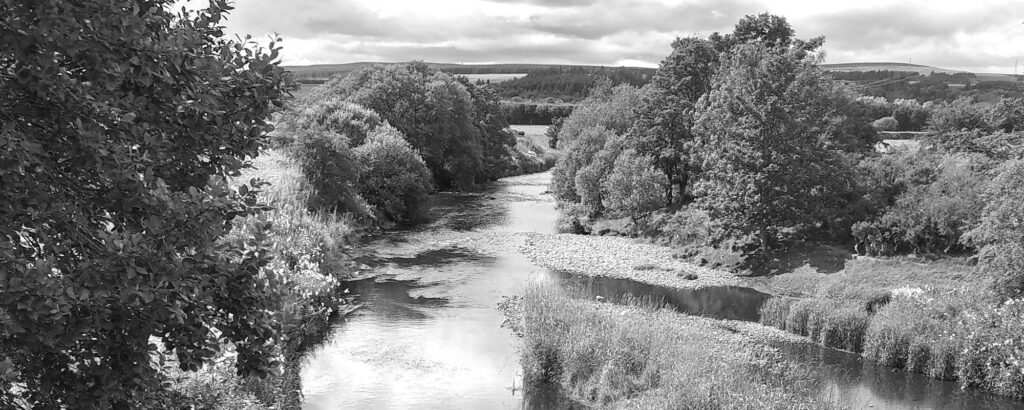
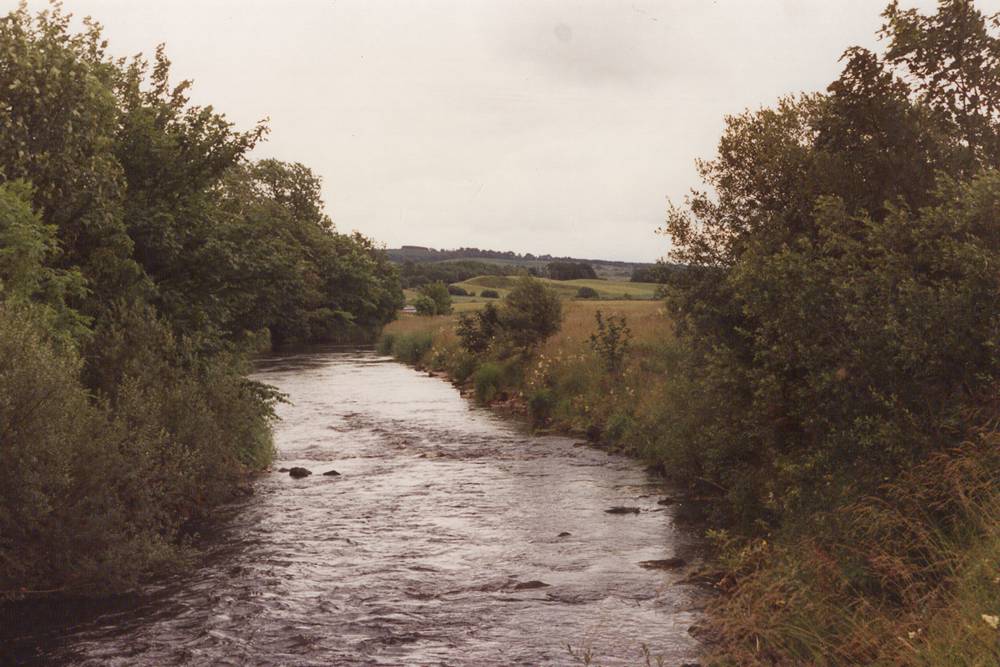
With its source at the head of Strathallan, Allan Water is joined by the River Knaik near Greenloaning, where it becomes a worthwhile game fishing river. The upper section of the association water features several gravelly runs and pools, before meandering through the flat expanse of the Strathallan flood plain, with its many deep, slow holding pools lying between high, open clay and sandy banks, with little in the way of bankside vegetation.
On approaching Kinbuck, the river takes on a more lively character, as the flow quickens over an ever increasing gradient, through Dunblane and on down to Bridge of Allan, where it again slows on its way to the confluence with the River Forth.
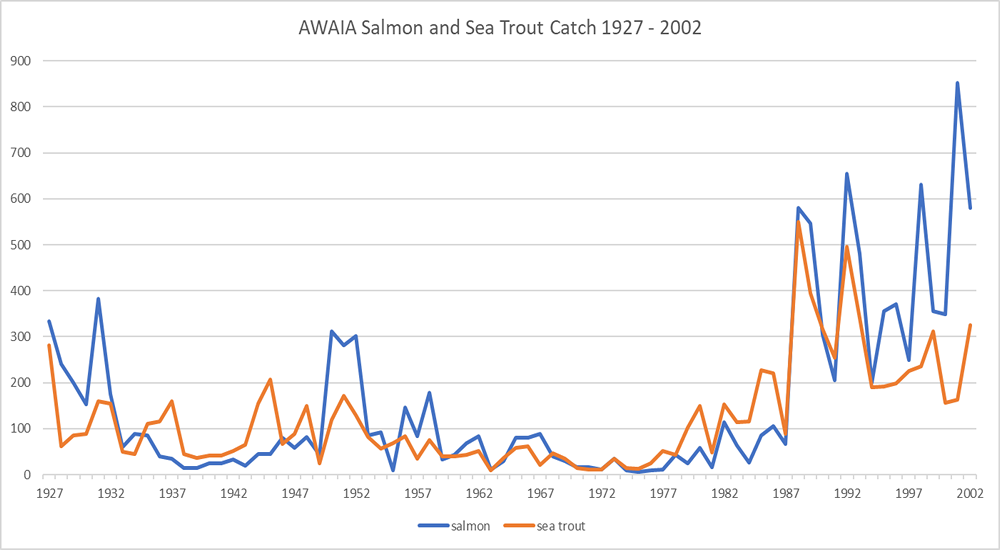
Throughout much of the twentieth century, the potential of Allan Water as a game fishing river had been held back by a continuous onslaught of adversity and misfortune. For a long time, industrial and domestic pollution left the lower river virtually uninhabitable for trout and impassable for migratory fish; ill-conceived drainage schemes silted up the spawning beds; while many running salmon and sea trout were intercepted in the lower river by netsmen or poachers. It was only in the late eighties that many of the problems were addressed, resulting in a dramatic improvement in the yearly runs, and rod catches, of migratory salmon and sea trout, as illustrated in the graph below.
April is a wee bit early for sea trout, certainly for night fishing, on Scottish rivers, so the focus in early season was usually on trout. I recall one very successful brown trout outing early in the 1993 season:
It was Wednesday 7th April. I had made my way to Allan Water at Greenloaning. Although the association had recently lost a fair stretch of water, known as the Loig Fishings, to a private syndicate, we still had about a mile of fishing on the right bank below the road bridge, where there are one or two very nice runs that are easily waded on a fine gravel bed, although the trees lining the banks can be a bit of a problem in places.
The river was running at a perfect height for the fly that day, the weather fairly calm with a light east wind, reasonably mild at about 10 degrees with good cloud cover, but still quite a bright day. In the first nice run below the bridge I caught two lovely trout of 1¼lb and ¾lb, and rose several more which I failed to hook. A size 12 Greenwell’s Glory seemed to be to their liking. Further downstream, in the pool below the electricity transmission line, I had a beauty of 2¼lb, then my biggest brown trout to date, and another smaller fish of half a pound. I also hooked but lost a second big trout. And the swallows had arrived!
During the previous season I had given little thought to the sea trout of the Allan, concentrating, when time permitted, on my new club water at Comrie, but, as the association catch records show, the Allan has a very decent run of sea trout, which can enter the river from April onwards. My first evening foray was on 21st June, mid-summer:
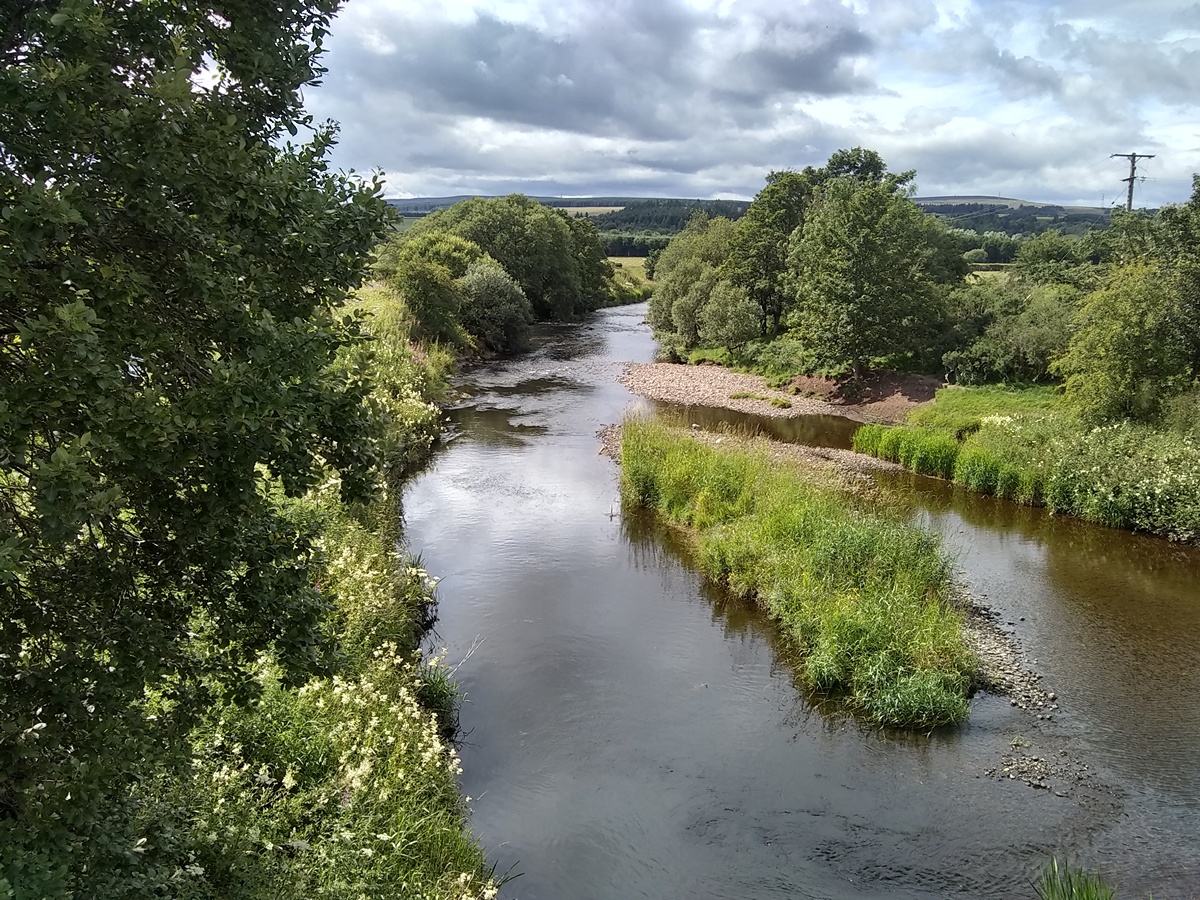
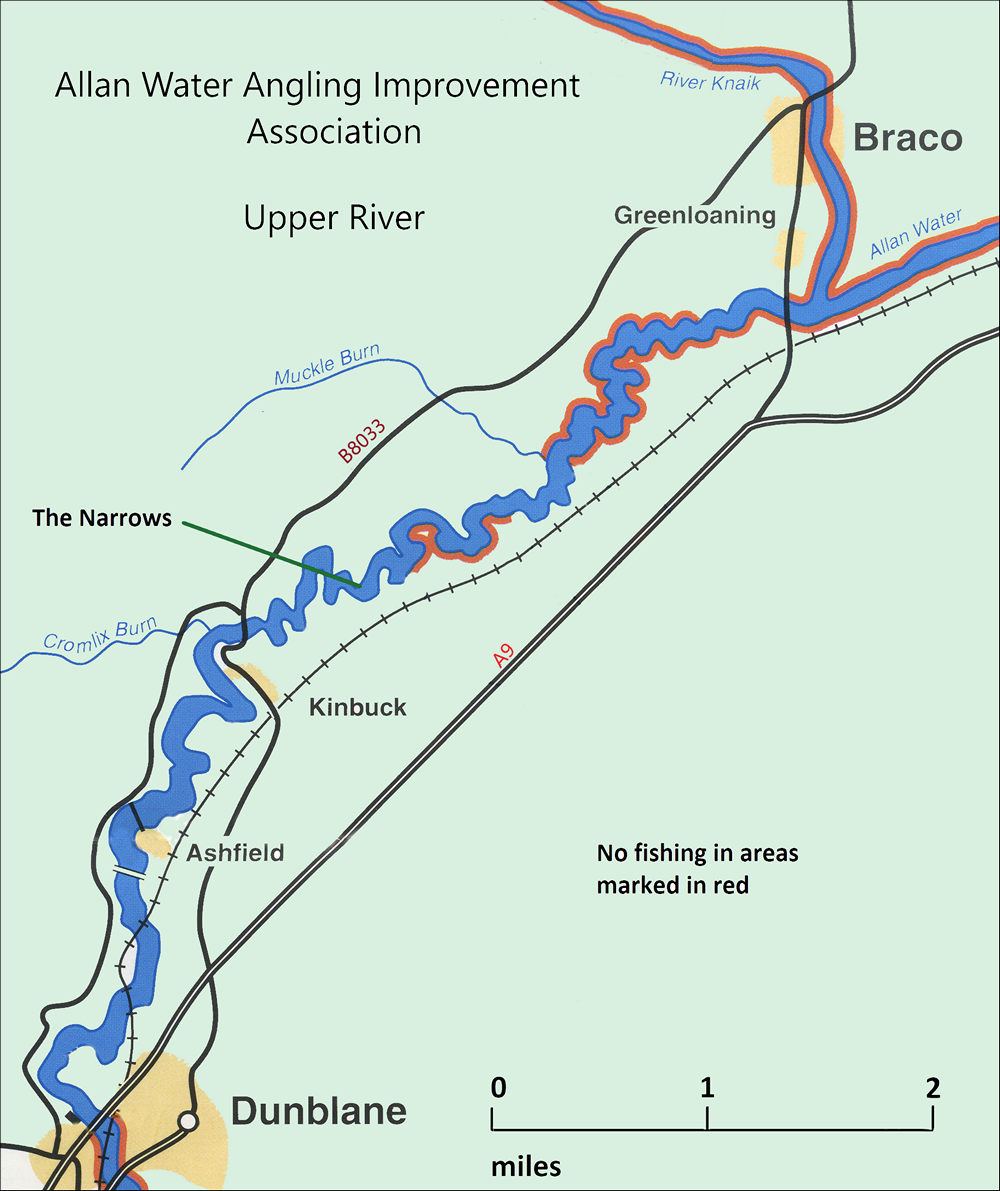
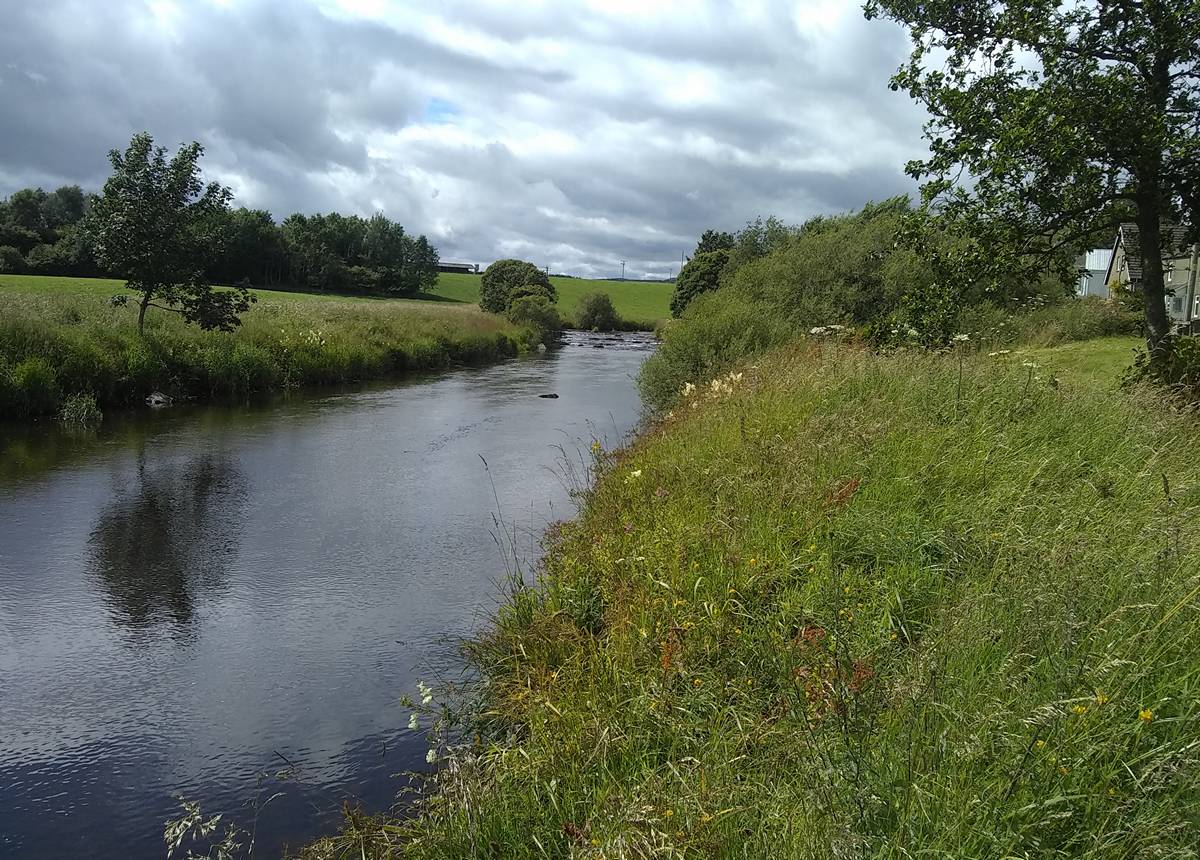
I parked at Cromlix bridge at 11 p.m. and walked up the left bank of the river to the top of our middle beat, which marches with the private water of the Blackford Farms beat above. In the fast fading light, I fished my way back downstream catching an early half-pound brown trout near the top of the beat. Continuing downstream, I hooked a lively sea trout in a fast, shallow run but lost it after ten seconds or so. It felt a good fish. By one o’clock I had covered a fair stretch of water and was on the point of giving up, but decided to have a few casts in a likely looking spot I had noted on the walk up. I later referred to this spot as “the Narrows”- a short, narrow section where the flow gathered pace over a shallowing gravelly riverbed at the tail end of a long, deep pool which flowed unhurriedly between high clay banks on a right hand bend in the river, about half a mile above Cromlix bridge.
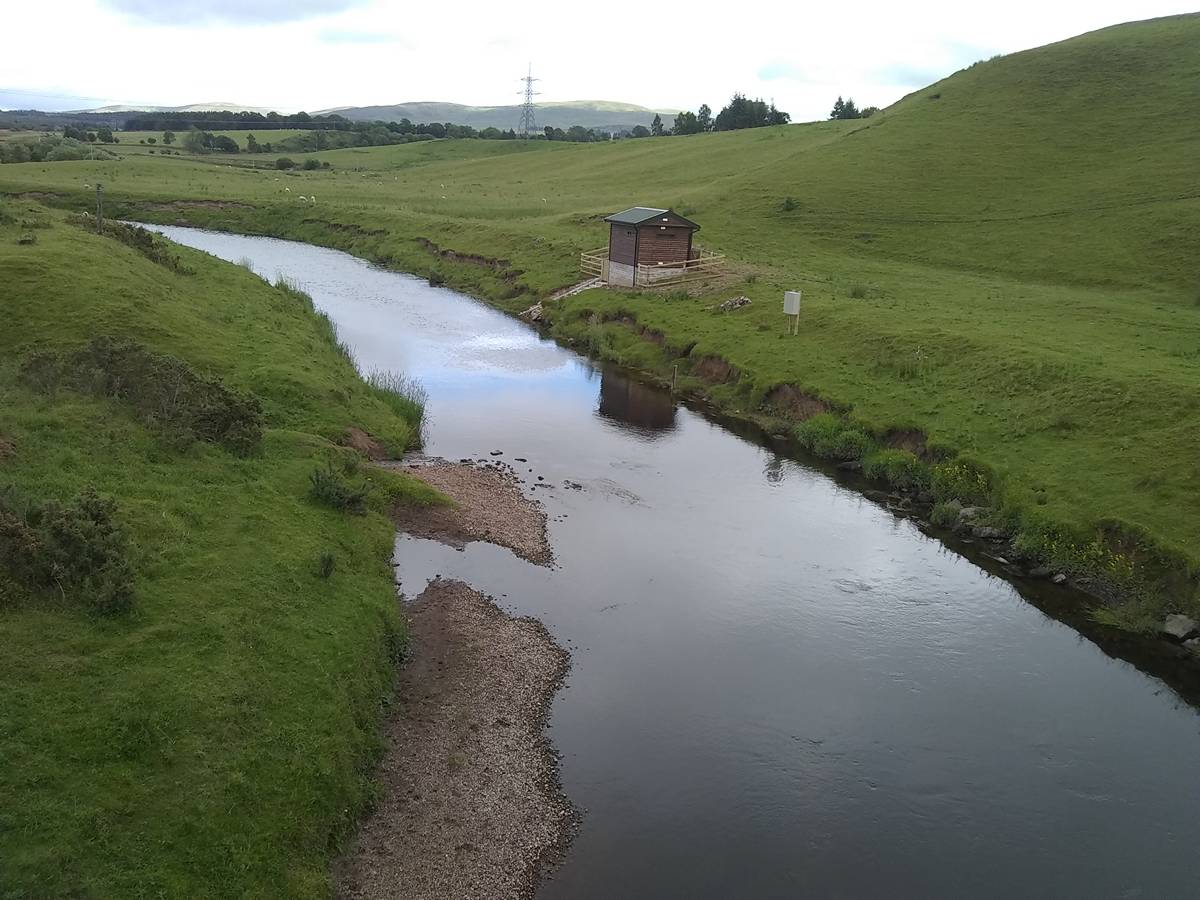
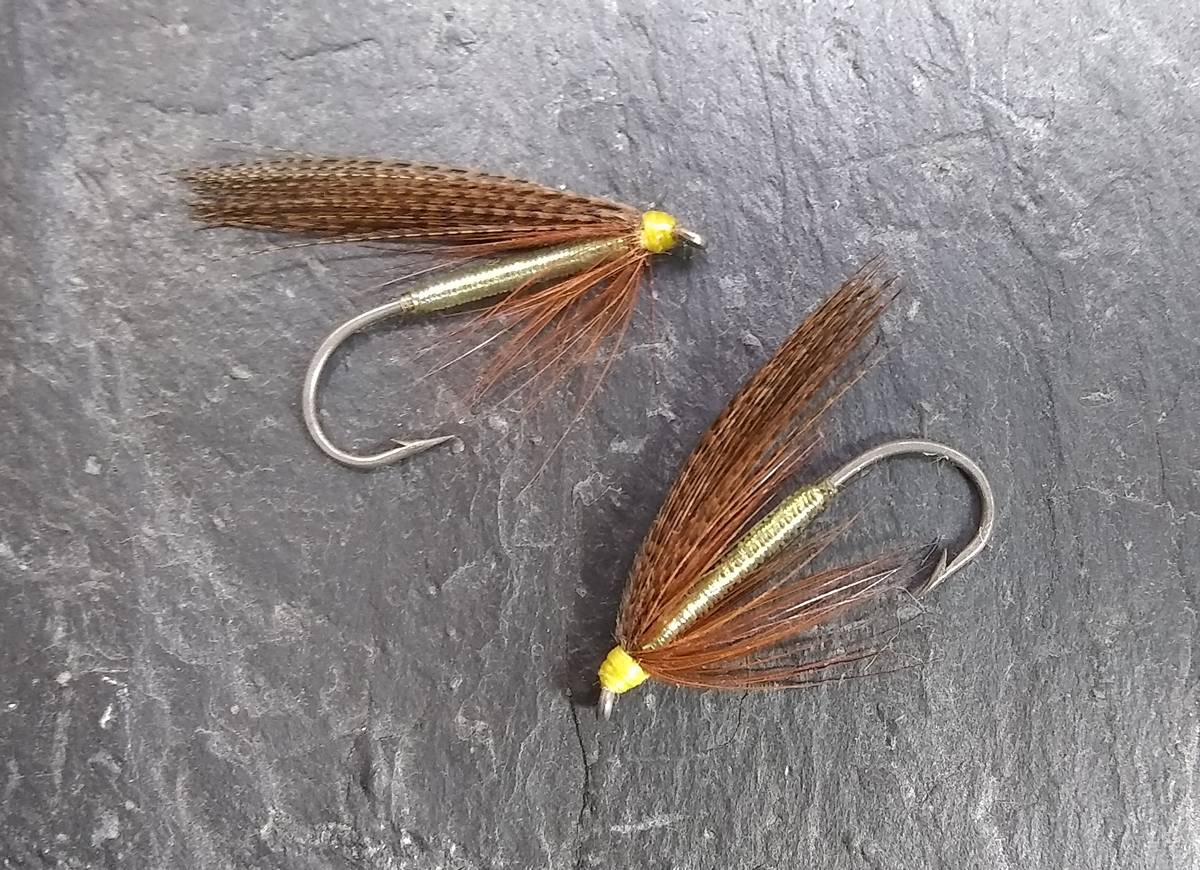
It was now very dark as I dropped down off the high bank quietly into the river. On my first cast I hooked a very lively sea trout of 2½lb which fought hard, coming out of the water two or three times, giving great sport on the ten-foot rod I had recently built on a Bruce and Walker “Light Line” blank, matched to a DT5F Aircel fly line and 5lb nylon cast. The successful fly was dressed on a size 10 longshank Partridge Grey Shadow hook, with a grey squirrel wing, a body of fine nylon line wound in touching turns over pearl lurex over yellow thread, and a ginger hackle. I later dressed this fly with either a squirrel tail or, more usually, a mallard wing and called it the Ginger Pearl, a fly that has taken numerous sea trout over the years.
Around 1.30 a.m. I hooked a second fish, about the same size as the first, in the run below the narrowing of the stream. This fish made long runs downstream, again leaping clear of the water several times, before coming to the net. Another very lively fish! I may have caught more if I had fished on, as the wind dropped and it became milder with a bit more cloud cover, but I was well satisfied and there is always work next day… and by now the midgies had found me!
An excellent introduction to Allan sea trout fishing, prompted by a meeting with John Webster, while fishing the Willows on the Crieff A.C. water on the Earn. There was little happening on the Earn and John told me of the excellent sea trout possibilities on the Allan, which he knew well. The tip certainly paid off. The river that night seemed to be running at a nice height for night fishing, with enough flow at the heads and tails of the deep pools for a floating line.
Allan sea trout seem to waste no time in making for the deeper holding pools above Kinbuck, which may explain my lack of success the previous season, when I had spent quite a few unproductive nights on the lower pools between Kinbuck and Ashfield. The whole length of the river between Greenloaning and Kinbuck is certainly worth exploring for sea trout, with a few of the more popular pools immediately below the Muckle Burn inflow worthy of particular attention.
Later that year, I paid another visit to the Allan, on Monday 26th July:
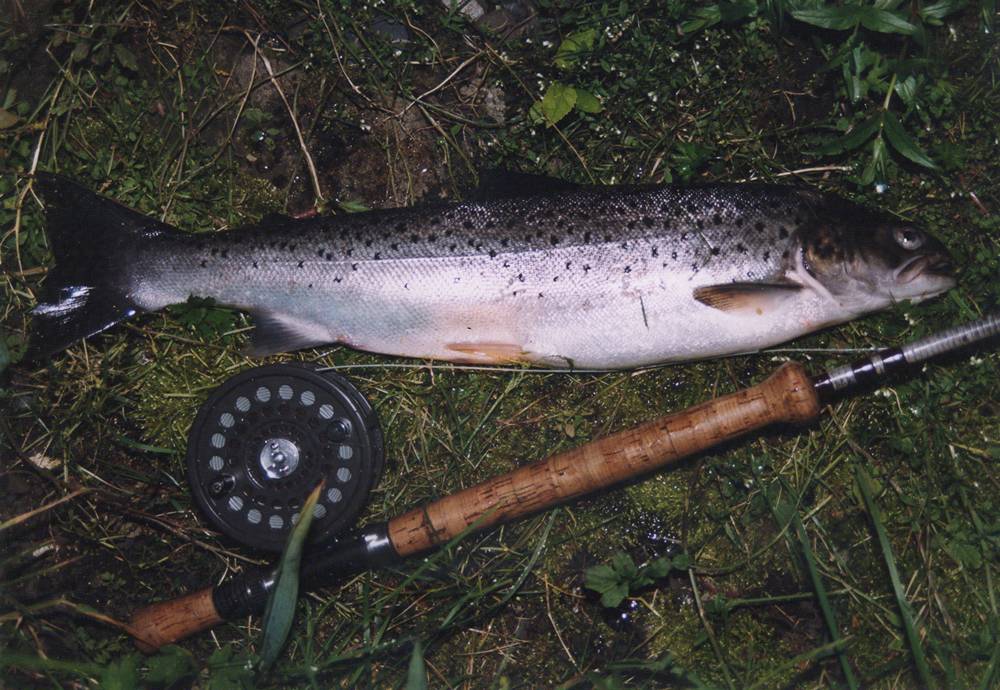
Parking by the railway crossing on the farm track behind Kinbuck, I made my way upstream to the Narrows. I fished from 11 p.m. to midnight. The river had been topped up recently by the odd shower but had since fallen back and was again running fairly low. Runs of salmon and sea trout had been reported. On reaching my pool, I slid quietly down off the high bank into the river, wading on to the fine gravel bed, a step or two clear of the bank, allowing a cast towards the tail of the top pool. On my very first cast I hooked a fish of 1¼lb. It had taken the dropper, a bushy size 8 Kate McLaren with a fluorescent peach floss tail. Only minutes later, a second sea trout swirled at my flies but missed. I cast again to the same spot and drew the flies smoothly over the fish, which took the same dropper fly immediately. It fought strongly but briefly, a lovely sea trout of 2¾lb. I beached each fish on the gently-shelving gravel bank at the pool tail, though a landing net would have been useful. Under a clear sky, the night air cooled quickly, set to drop as low as 7 degrees, according to the weather forecast. All went quiet, so I called it a night. Stealth, and a dark night, are of the utmost importance in approaching Allan sea trout, as the banks are high and there is little if anything in the way of tree cover. It would pay to fish longer and later perhaps on a mild cloudy night, if the midgies could be kept at bay!
Another night on the Allan a few seasons later, on 13th June, 1996:
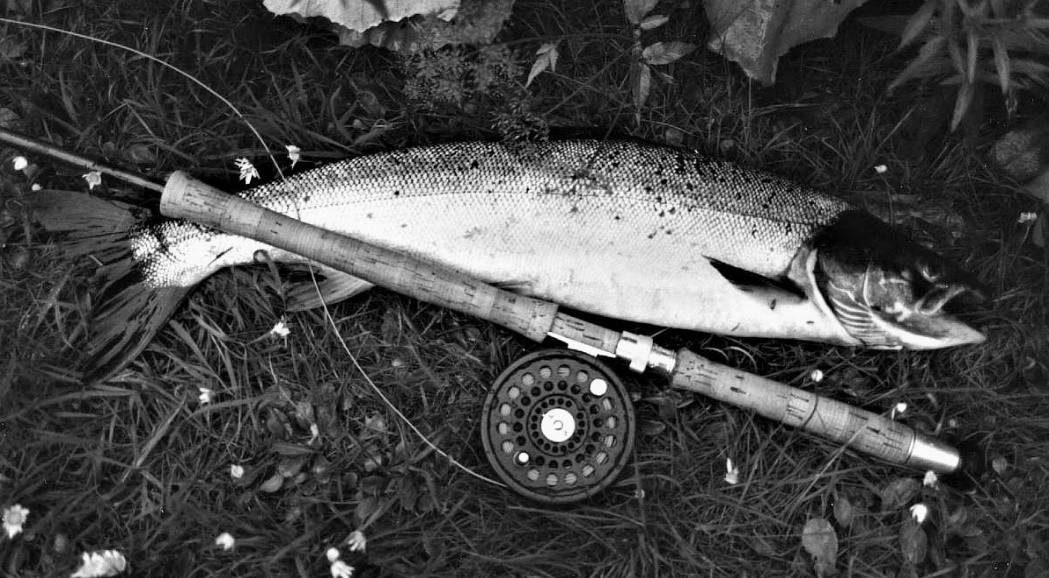
There is an anticyclone lying over the UK, with settled conditions set to last through the weekend. Daytime temperatures are currently around 20°C but they drop sharply at night, e.g. a temperature of 7°C is forecast for tonight. I fished the Narrows. At 11.15 p.m. it was still not really dark enough, but the trout were active and I hoped there might be a few sea trout among them. I slipped quietly into the pool seeking the cover of the high bank behind. I began with a small Black Pennell on the dropper with a size 8 Ginger Pearl on the tail. I missed an offer on the very first cast and, on the second, hooked a beauty which was all over the pool causing a great disturbance. It led me a merry dance but I eventually netted it in the pool below, a beautiful, perfectly proportioned hen sea trout of 2lb 9oz. What a fight on the 10 ft Light Line rod and DT5F line with 5lb leader! I wasn’t sure that the sea trout would settle after all this disturbance, but I did have another take about twenty minutes later, by a fish about the same size as the first, but it was only on briefly before throwing the hook. The air temperature dropped sharply, as it was a clear and calm night. Things went very quiet and I gave up at 12.30 a.m.
I continued to enjoy many good sea trout nights and salmon days on Allan Water but, more and more through the mid to late nineties, my thoughts would turn to the sea trout fishing on the River Earn at Crieff. Fishing a new river, or new beat, however, is rarely a recipe for instant success and over those first few seasons I was to spend many enjoyable, if fishless, nocturnal hours exploring the six miles of Crieff club water.
Chapter IV – On the Earn at Crieff
First edition printed hardback copies of SEA TROUT NIGHTS may be purchased at Coch-y-Bonddu Books